
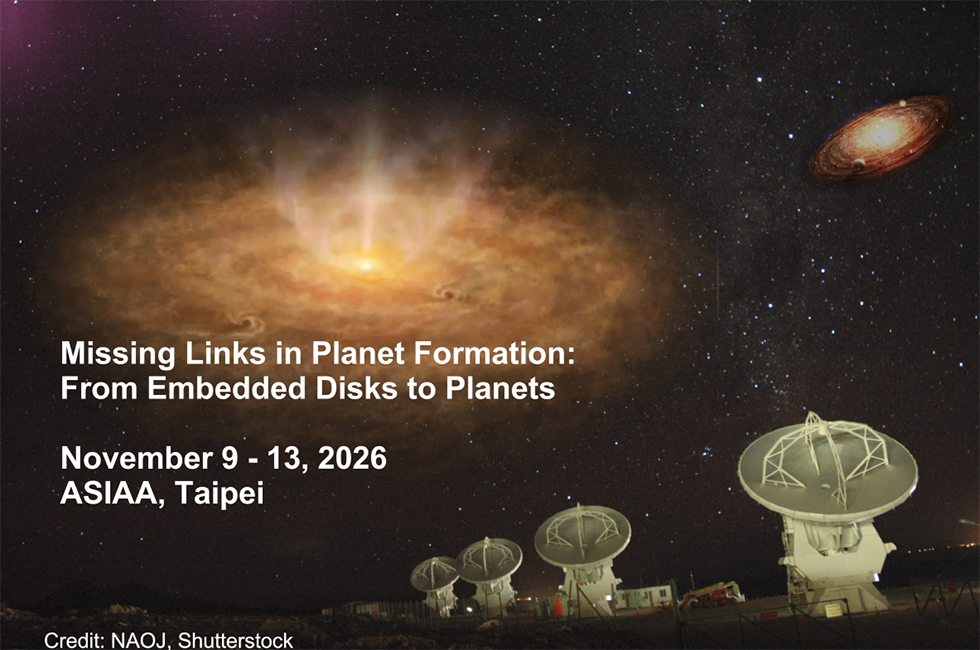
Poster Presentation
From Planet Formation to Habitability
Presenter: Oliver Carey (Brown University)
The search for life beyond Earth connects fundamental questions about planetary origins to the
future of astronomical discovery. Understanding habitability requires an integrated perspective
on how planetary systems form, how worlds evolve, and how the conditions necessary for life
can be identifed across vast distances. Habitable Worlds: Possible Places for Life in the Solar
System and Beyond, an intensive course at Brown University, engages students with these
questions and their implications for the next generation of exploration. The course examines
how the physical and chemical conditions of planet-forming environments influence the
composition, architecture, and evolutionary pathways of planetary systems. A comparative
approach places the Solar System within the broader diversity of exoplanetary systems,
connecting volatile inventories, atmospheric evolution, and stellar environments to the
emergence and persistence of habitable conditions. NASA’s planned Habitable Worlds
Observatory provides a context for this investigation, with science planning that includes both
circumstellar disk studies and the direct characterization of potentially habitable exoplanets. Our
goal is to frame habitability as an interdisciplinary problem connecting the initial conditions of
planet formation to the observable properties of mature worlds.

 asiaa.sinica.edu.tw